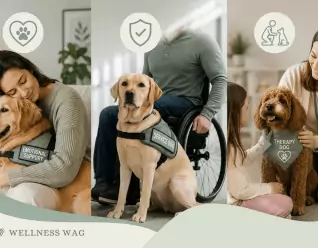


Find Out How to Get an ESA Letter in College Dorms 2026

by Nida Hammad
Last updated: March 10, 2026
Verified and Approved by:
Angela Morris,
MSW, LCSW
Fact Checked


- Students can have an ESA in college dorms under the Fair Housing Act, but must obtain a valid ESA letter from a licensed mental health professional.
- Knowing how to get an ESA letter is the first step; the process involves a clinical evaluation confirming your disability-related need.
- ESA letter requirements include documentation on official letterhead, a licensed professional’s signature, and a statement of medical necessity.
- An online ESA letter from a legitimate, licensed provider is a legally recognized option for students who cannot access in-person care.
- Colleges are not required to allow ESAs in all housing, but must make reasonable accommodations when proper documentation is submitted.
Introduction: ESAs on Campus and Why It Matters
If you are a college student managing anxiety, depression, PTSD, or another mental health condition, you may have wondered whether you can have an emotional support animal in your dorm. The short answer is yes, in many cases, but the process requires understanding how to get an ESA letter and fulfilling specific legal and institutional requirements. Knowing what is an ESA letter, meeting the ESA letter requirements, and working with your college’s disability services office are all steps that matter. In this comprehensive guide, we break down everything you need to know, from federal legal protections to getting your ESA letter from a doctor or therapist, so you can advocate for yourself with confidence.
What Is an ESA Letter?
Understanding what is an ESA letter is the foundation of this entire process. An ESA letter is an official document written by a licensed mental health professional (LMHP) that recommends an emotional support animal as part of a patient’s treatment plan. Unlike a prescription, it is a clinical recommendation that acknowledges the therapeutic benefit of having an animal companion for someone living with a diagnosed mental or emotional disability.
An ESA is not the same as a service animal. Service animals are trained to perform specific tasks and are protected under the Americans with Disabilities Act (ADA). Emotional support animals, by contrast, provide comfort and emotional stability simply through their presence. Because of this distinction, ESAs do not have the same public access rights as service animals, but they are protected in housing situations through the Fair Housing Act (FHA).
For college students, this matters because dorms are considered residential housing under the FHA. This means that if you have a legitimate ESA letter, your university is legally required to make a reasonable accommodation to allow your animal, even if their standard pet policy prohibits pets.
To explore what an official ESA letter looks like and how it works, visit WellnessWag’s ESA Letter page.
The Legal Framework: Fair Housing Act and College Dorms
The Fair Housing Act (FHA) is the primary law that protects students with ESAs. The FHA prohibits housing providers, including universities that operate residential housing, from discriminating against individuals with disabilities. Under this law, colleges and universities must provide reasonable accommodations to students who have a documented disability-related need for an emotional support animal.
Research highlights that while many students benefit from ESAs, institutional policies across colleges vary widely, and some students face significant barriers when requesting accommodations. This inconsistency underscores why students must understand their legal rights and have proper documentation in place before making a request.
The Department of Housing and Urban Development (HUD) has issued guidance confirming that universities receiving federal financial assistance must comply with FHA requirements for ESA accommodations. However, universities are allowed to establish reasonable policies around how and when accommodation requests are made, what documentation is required, and how animals must be managed on campus.
It is worth noting that universities can deny an ESA accommodation if the animal poses a direct threat to the health or safety of others, causes substantial physical damage to property, or if the accommodation would fundamentally alter the nature of the institution’s housing program. These exceptions are narrow and must be assessed on a case-by-case basis.
ESA Letter Requirements: What Makes a Letter Legitimate?
Not all documentation is created equal. Colleges and universities have specific ESA letter requirements that must be met before they will honor an accommodation request. Understanding these requirements upfront will help you avoid delays and frustration.
A legitimate ESA letter must include the following elements:
- The letterhead of the licensed mental health professional, including their name, title, license number, and state of licensure.
- A clear statement that you, the patient, have been diagnosed with a mental or emotional disability recognized in the DSM-5.
- A statement that the ESA is part of your treatment plan and that the animal provides therapeutic benefit related to your specific disability.
- The professional’s signature and the date the letter was written.
- Contact information for the professional so the institution can verify the letter’s authenticity if needed.
Research confirms that students who arrive with complete, professionally prepared documentation experience significantly fewer delays and denials when requesting ESA accommodations from campus housing offices.
A letter that simply states you “have a pet” or that a pet makes you “feel better” will not satisfy institutional requirements. The letter must reflect a genuine clinical assessment of your mental health status and the role the ESA plays in your treatment.
How to Get an ESA Letter: A Step-by-Step Guide

Knowing how to get an ESA letter can feel overwhelming, especially for students who are new to mental health care or who are managing a condition for the first time away from home. The process is more straightforward than many people realize, and breaking it down into steps makes it manageable.
Step 1: Consult a Licensed Mental Health Professional
The first step is to connect with a licensed mental health professional. This could be a psychologist, psychiatrist, licensed clinical social worker (LCSW), licensed professional counselor (LPC), or another licensed therapist. You can start with your college’s counseling center, your primary care physician, or a private practice provider.
During your appointment, be honest about your symptoms, how they affect your daily life, and how an animal companion has helped or may help your mental health. Your provider will conduct a clinical assessment before making any recommendation.
Step 2: Discuss Your Need for an ESA
Not every mental health provider will automatically suggest an ESA. You may need to raise the topic directly. Explain that you are a college student living in a dorm, that you have a specific animal in mind, and that you believe having that animal would meaningfully support your mental health treatment. Your provider will evaluate whether this recommendation aligns with your clinical picture.
Step 3: Receive the ESA Letter
If your provider agrees that an ESA is therapeutically appropriate, they will write a letter on their official letterhead that meets the standard ESA letter requirements. Make sure to review the letter before submitting it to your university to ensure all required elements are present.
Step 4: Submit the Letter to Campus Housing
Once you have your letter, submit it to your university’s housing or disability services office according to their stated process. Most schools have a formal accommodation request procedure that includes paperwork, timelines, and potentially an interview or follow-up questions. Start this process as early as possible, ideally before the academic year begins.
Ready to start the process? Get your legitimate ESA letter through WellnessWag, where licensed mental health professionals evaluate your needs and issue documentation that meets all ESA letter requirements.
Getting an ESA Letter from a Doctor vs. a Therapist

Many students wonder whether they need a specific type of provider when getting an ESA letter from a doctor versus a therapist or counselor. The short answer is that both are valid, as long as the provider is licensed in your state and has a professional relationship with you.
A primary care physician or psychiatrist can write an ESA letter, particularly if they are already involved in managing your mental health. However, many physicians refer patients to a mental health specialist for this type of documentation, since therapists and counselors are typically more experienced in conducting the kind of clinical assessments that justify an ESA recommendation.
A study published on disability accommodation in higher education emphasizes that the legitimacy of the documentation depends not on the type of licensed professional but on the thoroughness and accuracy of the clinical evaluation underlying it.
If you are currently in therapy at your college counseling center, your therapist there is a natural starting point. If you do not have an existing provider, you may need to seek one out either on campus, through your insurance network, or through a telehealth service.
Online ESA Letter: Is It Legal and Legitimate?
The rise of telehealth has made it easier than ever to access mental health care, and this extends to obtaining an online ESA letter. A legitimate online ESA letter is one that comes from a licensed mental health professional who has conducted a real clinical evaluation, even if that evaluation took place via video call or another telehealth platform.
Not all online services offering ESA letters are legitimate. There are websites that sell “instant” or “same-day” letters with no genuine clinical interaction. These letters are not valid and can create serious problems if submitted to a university housing office. Institutions are increasingly aware of fraudulent letters and may take steps to verify documentation directly with the issuing professional.
A legitimate online ESA letter requires:
- A real clinical evaluation by a licensed professional.
- A documented therapeutic relationship or a thorough intake assessment.
- A letter that meets all standard ESA letter requirements, including the professional’s license number and state of licensure.
Doctoral dissertation research found that as ESA requests on college campuses increased, so did institutional skepticism around the documentation students presented, particularly letters obtained through online-only services without a genuine therapeutic relationship.
This makes it critical to choose a reputable online ESA provider. Look for platforms that connect you with licensed professionals in your state, conduct genuine evaluations, and stand behind their documentation.
Understanding College Pet Policies and How ESAs Are Different
Standard college pet policies and ESA accommodations are governed by entirely different rules. A standard pet policy reflects what the institution allows as a matter of preference and management. An ESA accommodation is a legal requirement under the Fair Housing Act.
Most colleges prohibit pets in dormitories, and for good reason. Shared living spaces have limited square footage, students have varying allergies and phobias, and managing animals in a community setting presents logistical challenges. However, ESAs are not “pets” in the legal sense when it comes to housing law. They are part of a student’s disability-related treatment plan.
When a student with a valid ESA letter requests a housing accommodation, the university must engage in an interactive process to determine whether the request can be met. This process should be respectful, timely, and focused on the student’s documented need, not simply on the institution’s general pet restrictions.
Understanding your college’s specific housing policies before submitting your request is important. Visit WellnessWag’s College Pet Policy guide for an overview of how different institutions approach ESA and pet accommodations, and how to navigate the process at your specific school.
Research published in the Journal of College and University Student Housing found that while the number of ESA accommodation requests has grown substantially over the past decade, many college housing offices lack consistent training on how to evaluate and respond to them, leading to uneven outcomes for students across institutions.
What Happens After You Submit Your ESA Letter?
| Review Stage | What the College May Do |
|---|---|
| Initial Review | Review your ESA letter and accommodation request within a defined timeframe |
| Verification | Contact the issuing mental health professional to confirm the letter’s authenticity |
| Additional Documentation | Request completion of intake forms related to disability and accommodation needs |
| Student Meeting | Schedule a meeting to discuss your needs and housing considerations for the ESA |
| Health & Safety Evaluation | Assess whether the requested animal poses any health or safety concerns to the campus community |
| Approval & Registration | Provide written approval and instructions to register the ESA with the housing office |
| Renewal Requirement | Require annual renewal, which may include submitting a new ESA letter each academic year |
Once you submit your ESA letter to your college’s housing or disability services office, the institution will typically review your request and respond within a defined period. During this time, they may:
- Contact the issuing mental health professional to verify the letter’s authenticity.
- Ask you to complete additional intake forms related to your disability and accommodation needs.
- Request a meeting with you to discuss your needs and any practical considerations related to housing your ESA in shared living spaces.
- Evaluate whether the specific animal you are requesting poses any health or safety concerns for the campus community.
If your request is approved, you will typically receive written confirmation of your accommodation and instructions about how to register your ESA with the housing office. Some schools require annual renewal of the accommodation, meaning you may need to obtain a new ESA letter each academic year.
If your request is denied, you have the right to appeal the decision. The institution must provide a written explanation of the denial and, if it is based on your specific disability or documentation, that explanation must be carefully and legally justified. You may want to consult with a disability rights advocate or attorney if you believe your accommodation was wrongfully denied.
Student Experiences: What Research Tells Us
Beyond the legal and procedural framework, real student experiences shed important light on what it is actually like to navigate ESA accommodation requests in college. Research consistently shows that students who have ESAs report meaningful improvements in mental health outcomes, but also that the process of securing approval can itself be a source of significant stress.
A narrative inquiry study on emotional support animals on college campuses, published in the Journal of Campus and University Student Housing, found that students reported feeling judged, disbelieved, or subjected to excessive scrutiny when requesting ESA accommodations. Many described having to repeatedly justify their mental health needs in ways that felt invasive and stigmatizing.
Dissertation research from New College of Florida also explored the intersection of animal-assisted interventions and student mental health, finding that access to emotional support animals was associated with reduced anxiety and improved academic functioning among students with diagnosed conditions.
Research from Immaculata University’s doctoral program, examined how institutional culture and staff training levels affected the outcomes of ESA accommodation requests, noting that campuses with better-trained staff and clearer policies tended to produce more equitable outcomes for students.
Taken together, this body of research makes clear that having a well-prepared, legitimate ESA letter is only part of the equation. Advocates, allies, and informed students are all essential to navigating a system that, while legally clear at the federal level, remains inconsistently implemented at many institutions.
Tips for a Smooth ESA Accommodation Process in College
If you are preparing to request an ESA accommodation at your college, the following strategies can help make the process as smooth as possible:
- Start early. Submit your accommodation request before the academic year begins, or as soon as you decide you want an ESA. Last-minute requests are harder to process and may not be approved before you move in.
- Know your rights. Familiarize yourself with the Fair Housing Act, HUD guidance on ESAs, and your institution’s specific housing policies before you begin the process.
- Get proper documentation. Make sure your ESA letter meets all standard ESA letter requirements, including the professional’s licensure details, your diagnosis, and a clinical justification for the ESA recommendation.
- Work with disability services. Even if your request goes through the housing office, your campus disability services office can be a valuable ally. They can advocate on your behalf and help you navigate any challenges.
- Be prepared for questions. Institutions may ask about your animal, your housing preferences, and your specific accommodation needs. Being prepared with clear, honest answers will facilitate a faster review.
- Keep records. Save copies of every document you submit and every communication you receive related to your accommodation request. This creates a paper trail in case you need to appeal a decision.
How WellnessWag Can Help You Get Your ESA Letter
Navigating the ESA process alone can be stressful, especially when you are already managing a mental health condition. WellnessWag is designed to simplify the process and connect students and other individuals with licensed mental health professionals who understand both the clinical and legal sides of ESA documentation.
Through WellnessWag, you can connect with a licensed professional for an online evaluation, receive a legally compliant ESA letter that meets all standard ESA letter requirements, and get support navigating the college accommodation process. The platform is designed to make the online ESA letter process accessible, legitimate, and stress-free.
Take the first step toward getting your ESA letter today. Visit WellnessWag’s ESA Letter page to learn more and start your evaluation with a licensed professional who can assess your needs and provide documentation that your college will recognize.
Common Mistakes to Avoid When Applying for an ESA in a College Dorm
Students often make avoidable mistakes that delay or derail their ESA accommodation request. Here are the most common pitfalls and how to avoid them:
Using a Fraudulent or Non-Compliant Letter
Submitting a letter from a website that does not require a genuine clinical evaluation is one of the most common and damaging mistakes. Not only can it result in your request being denied, but submitting fraudulent documentation to a university can have academic and disciplinary consequences.
Waiting Until Move-In Day
Many students wait until the last minute to request accommodations, leaving insufficient time for the institution to process the request. Submit your ESA letter as early as possible, ideally months before you plan to arrive on campus.
Choosing the Wrong Type of Animal
While the law does not restrict ESAs to dogs and cats, many universities have policies about what kinds of animals they will accommodate in residential housing. Exotic animals, large animals, or animals with complex care needs are more likely to raise concerns. Choosing an animal that is manageable in a small shared living environment will make your request easier to approve.
Not Communicating with Roommates
If you have a roommate, your ESA affects their living situation too. While your accommodation rights take legal precedence, proactively communicating with your roommate and the housing office about allergies, phobias, or other concerns can help everyone adjust more smoothly.
Failing to Renew Documentation
Many institutions require annual renewal of ESA accommodation letters. Students who forget to renew their documentation before the start of a new academic year may find themselves without an approved accommodation when they return to campus.
What Types of Animals Qualify as ESAs in College Dorms?
Unlike service animals, which are almost exclusively dogs (with miniature horses as the only recognized exception under the ADA), the law does not specify a particular species for emotional support animals. In theory, any animal can qualify as an ESA if a licensed mental health professional recommends it as part of your treatment plan.
In practice, however, universities have more latitude to set reasonable restrictions on the types of animals they will accommodate in residential housing. Dogs and cats are the most commonly accommodated ESA species. Some schools also accommodate small mammals like rabbits or guinea pigs, as well as birds and fish.
Animals that are more likely to raise safety, sanitation, or logistical concerns, including reptiles, large dogs, or farm animals, may face higher scrutiny. The key factor the institution will assess is whether accommodating the specific animal is reasonable in the context of a shared residential living environment.
Conclusion: Your Rights, Your Animal, Your Mental Health
Living with a mental health condition in a college dorm does not have to mean living without the emotional support that has helped you thrive. Under the Fair Housing Act, students with documented disabilities have the legal right to request an ESA accommodation, and with the right documentation and approach, most requests can be successfully navigated.
The key is preparation. Understanding what is an ESA letter, knowing the ESA letter requirements, and taking the right steps to get a legitimate letter, whether from a doctor, therapist, or a trusted online ESA letter provider, will put you in the strongest possible position when you approach your university’s housing office.
Your mental health matters, and so does your right to the accommodations that support it. Take the time to do this right, and you will find that having your ESA by your side in your college dorm is well within reach.
Frequently Asked Questions
1. How to get an ESA letter for college housing?
To get an ESA letter for college housing, schedule an appointment with a licensed mental health professional such as a therapist, psychologist, or psychiatrist. During the appointment, discuss your mental health condition and explain how an emotional support animal would benefit your treatment. If the provider agrees, they will write a letter on their official letterhead that includes your diagnosis, a statement of medical necessity, and their licensure details. You can then submit this letter to your college’s housing or disability services office as part of a formal accommodation request.
2. What is an ESA letter and why do I need one?
An ESA letter is an official document written by a licensed mental health professional that recommends an emotional support animal as part of your mental health treatment. You need one because federal law, specifically the Fair Housing Act, requires that you present valid documentation of your disability-related need in order to request a housing accommodation for your ESA. Without a proper ESA letter, colleges are not required to allow your animal in residential housing.
3. Is an online ESA letter valid for college dorms?
Yes, an online ESA letter can be valid for college dorms, provided it is issued by a licensed mental health professional who has conducted a genuine clinical evaluation. The key is that the professional must be licensed in your state and must have actually assessed your mental health needs, not simply provided a letter in exchange for a fee. Avoid services that offer instant letters without a real clinical process, as these are not legitimate and may be rejected by your institution.
4. Can my college deny my ESA accommodation request?
A college can deny an ESA accommodation request under specific circumstances, such as if the animal poses a direct threat to the health or safety of others, would cause substantial physical damage to property, or if the accommodation would fundamentally alter the nature of the institution’s housing program. However, blanket denials based solely on a general no-pets policy are not legally permissible under the Fair Housing Act. If your request is denied, you have the right to receive a written explanation and to appeal the decision.
5. Do I need to renew my ESA letter every year for college?
Many colleges and universities require students to renew their ESA accommodation documentation annually. This typically means obtaining a new letter from your mental health provider at the start of each academic year. Check your institution’s specific housing policy to confirm their renewal requirements and plan accordingly to avoid any gaps in your approved accommodation status.
6. What ESA letter requirements do most colleges use?
Most colleges require that an ESA letter include the full name and contact information of the licensed mental health professional, their license type and number, their state of licensure, the date the letter was written, a statement confirming your diagnosis of a mental or emotional disability, and a clinical explanation of how the ESA supports your treatment. Some institutions also require the letter to be issued within a certain timeframe, often within the past 12 months, and may contact the provider directly to verify its authenticity.
Hi, I’m Nida, a writer and proud member of the Wellness Wag team. I’m passionate about sharing insights on how therapy dogs and emotional support animals can enhance emotional health, comfort, and overall well-being.
Certify Your Emotional Support Animal Today

King, C. (2021). Emotional support animals in college housing: A study of policy and practice [Doctoral dissertation, Immaculata University]. Immaculata University Library Digital Commons.
Murray State University Honors Program. (n.d.). Emotional support animals on college campuses: Policies and student experiences. Murray State University Digital Commons.
University of Nevada, Reno. (n.d.). ESA accommodation research and best practices in higher education. ScholarWolf, University of Nevada Reno.
Journal of College and University Student Housing. (n.d.). Emotional support animals and housing accommodation in higher education. JSTOR.
ProQuest Dissertations and Theses. (n.d.). Emotional support animals in higher education: An analysis of requests and institutional responses. ProQuest.
Project MUSE. (n.d.). Disability accommodation and higher education: A legal and clinical perspective. Project MUSE.
Journal of Campus and University Student Housing. (n.d.). Emotional support animals on campus: A narrative inquiry. Scholastica.
New College of Florida. (n.d.). Animal-assisted intervention and student mental health outcomes. New College of Florida Digital Commons.
Table of Content


Your Pet is More Than a Companion
An ESA Letter can give you the legal support to keep them close
Why You Can Rely on Us?
At Wellness Wag, we believe your pet deserves care rooted in both science and compassion. Each article is carefully researched, written in clear language for pet owners, and then reviewed by qualified professionals to ensure the information is evidence-based, current, and practical for real-life care. Our goal is to help you feel confident in making informed decisions about your pet’s health and well-being.
Reviewed by
Angela Morris, MSW, LCSW
Angela is a licensed clinical social worker with 20 years of experience in patient advocacy and community mental health. She has assisted numerous clients with ESA evaluations and brings a deep understanding of disability accommodations, ensuring that all information is accurate, supportive, and practical.

Written by :
Nida Hammad
Last Updated :
March 10, 2026